

Sales On NOW... Don't Miss Out on Our Best Deals on Fitness!
🖤 Buying through our links helps support our app at no extra cost to you 🖤

Understanding Nordic Walking: Expert Tips on How to Do It Correctly and Its Benefits
Introduction to Nordic Walking and Its Growing Popularity
If you haven’t hopped on the fitness trend wagon yet, it’s time to check out Nordic walking. Alongside other popular activities like rucking, treadmill workouts, and silent walking, Nordic walking is becoming a favorite for many who want a fresh, effective way to stay active outdoors.
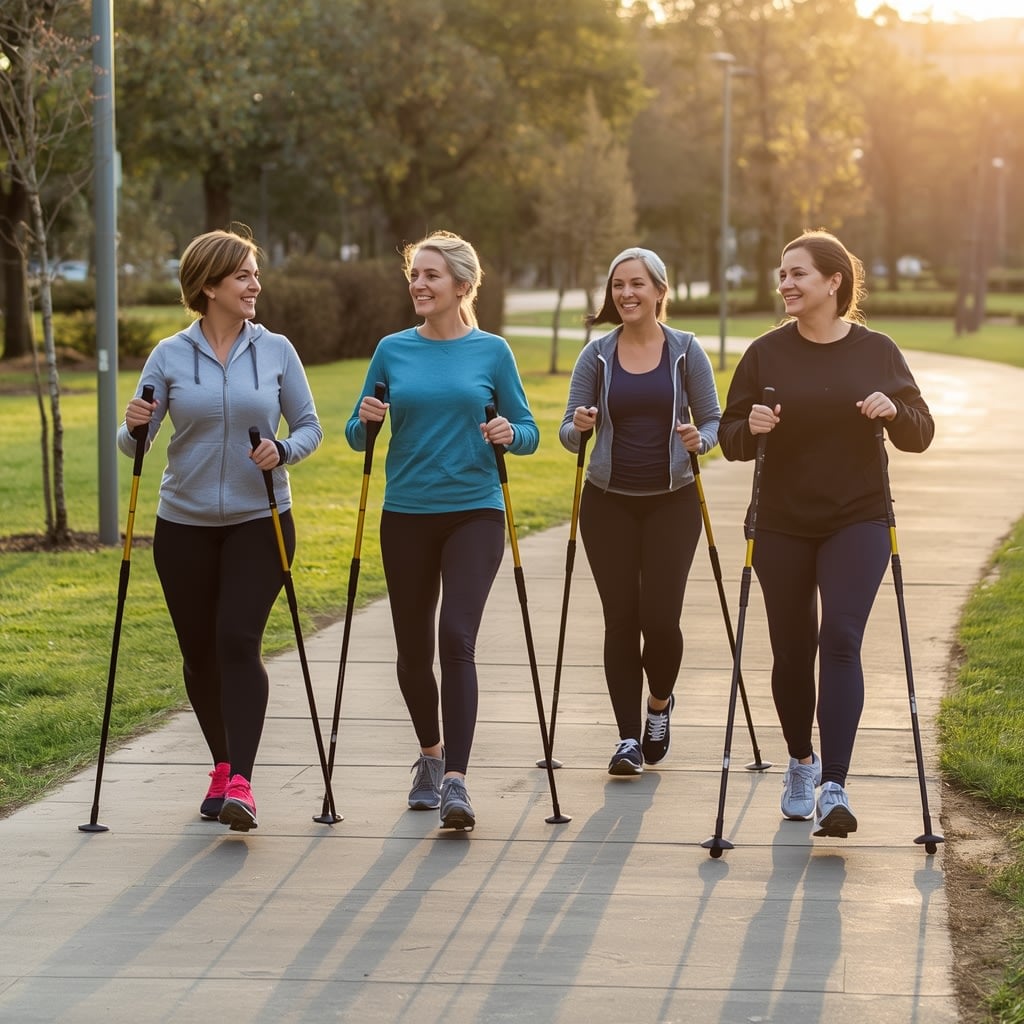
Nordic walking stands out because it’s more than just a stroll. It incorporates the use of specially designed poles, which means you engage not only your legs but also your arms and upper body, turning a simple walk into a full-body workout. Initially developed as an off-season training method for cross-country skiers to maintain their conditioning without snow, it has since evolved into a versatile activity suitable for any time of the year and nearly any terrain.


Sales On NOW... Don't Miss Out on Our Best Deals on Fitness!
Grab These Deals on Nordic Walking Poles Before They're Gone!
🖤 Buying through our links helps support our app at no extra cost to you 🖤
What Exactly is Nordic Walking and How Does It Work?
At its core, Nordic walking involves walking with poles that help propel you forward, engaging muscles that regular walking doesn’t activate as much. You can think of it as a blend between cross-country skiing and walking—just without skis or snow. By using poles with a certain technique, you incorporate your arms, chest, shoulders, and back muscles into each step, making your workout more comprehensive compared to typical walking routines.
One of the biggest advantages of Nordic walking is that it enhances your fitness level by strengthening muscles across your entire body, improving cardiovascular health, and reducing the strain on your joints, especially in the ankles, knees, and hips. Plus, you don’t need perfect weather or surfaces to enjoy it; you can Nordic walk on pavement, trails, grass, or even sandy paths, making it an accessible fitness activity for many.
It’s important to note that Nordic walking poles are different from trekking poles. Nordic poles are designed with a special grip and strap system that allows your hands to remain relaxed as you push off and propel yourself forward, optimizing your workout benefits while preserving a natural walking posture.
Sales On NOW... Don't Miss Out on Our Best Deals on Fitness!
Grab These Deals on Adjustable Walking Shoes Before They're Gone!
🖤 Buying through our links helps support our app at no extra cost to you 🖤

Mastering the Basics: How to Perform Nordic Walking with Proper Technique
Like any new physical activity, learning the right technique is essential to getting the most out of Nordic walking and preventing injuries. Here are three crucial points to focus on when you start:
1. Maintain Opposite Arm and Leg Movement: Just like in regular walking, your opposite arm and leg should move together. When you add poles, you need to stay intentional about keeping this natural rhythm. Begin by walking normally while dragging the poles lightly behind you to get comfortable with the timing and feel.
2. Angled Pole Placement: Unlike trekking poles that are planted straight down, Nordic walking poles are placed on the ground at an angle, approximately 45 degrees. Your arms stay relaxed with elbows bent slightly, and your hands mimic a handshake grip. This angled planting allows you to push against the poles effectively and engage your upper body muscles.
3. Pushing Technique: When pushing off, aim to extend your arm and hand backward past your hip to fully activate your muscles. Begin with a firm grip on the pole, then gradually relax your hand as your arm straightens. Mastering this push creates propulsion and maximizes the workout for your arms and shoulders.
To make Nordic walking part of your routine, start with two to three sessions per week for about 20 to 30 minutes each. As you build endurance and skill, you can increase frequency and duration to enhance your fitness. Intermediate walkers might aim for three to four times a week for 30 to 45 minutes, while advanced practitioners can enjoy up to five workouts weekly lasting close to an hour.
Sales On NOW... Don't Miss Out on Our Best Deals on Fitness!
Grab These Deals on Shock Absorbing Pole Tips Before They're Gone!
🖤 Buying through our links helps support our app at no extra cost to you 🖤
Exploring the Advantages of Nordic Walking for Your Health and Wellbeing
Incorporating poles and the proper Nordic walking technique transforms your walk into a powerful exercise, offering numerous health benefits. For starters, it remains a low-impact activity, which is gentle on your joints and great for those recovering from injuries or looking to avoid stress on knees and ankles. Using poles reduces the pressure on these joints, especially when navigating downhill or uneven surfaces.
Moreover, Nordic walking engages your upper body muscles, providing a strength training effect that regular walking simply can’t match. Studies shared by Women's Spot highlight that this activity boosts cardio-respiratory fitness, flexibility, and muscle strength, with noticeable muscle activation in your arms and torso during every step.
Balance and coordination also improve as you get used to controlling the poles in sync with your steps. Since you maintain four points of contact with the ground rather than the usual two, Nordic walking offers increased stability, which is especially beneficial for individuals who may have balance issues or want to enhance their overall coordination.
Beyond muscle and balance benefits, Nordic walking supports cardiovascular health by elevating your heart rate more than typical walking. This full-body workout helps improve resting heart rate, blood pressure, and maximum oxygen uptake, contributing to better overall heart function and stamina.
Whether you're seeking a new way to stay fit, recover from joint discomfort, or just enjoy more dynamic outdoor activity, Nordic walking provides a holistic workout that can fit seamlessly into your lifestyle and fitness goals.
Sales On NOW... Don't Miss Out on Our Best Deals on Fitness!
Grab These Deals on Fitness Tracker Watch Before They're Gone!
🖤 Buying through our links helps support our app at no extra cost to you 🖤
Follow Us
Help our community grow by following us on social media

Essential Gear and Tips for Getting Started with Nordic Walking
Getting ready to try Nordic walking? The good news is that you don’t need a lot of specialized equipment. The basics include comfortable walking shoes suited to your terrain and a good pair of Nordic walking poles. These poles come with a glove-like strap system to keep your hands supported and often feature adjustable lengths to suit your height perfectly.
The ideal pole length is roughly 68 percent of your total height, but the best way to check your fit is by standing with your arms bent at a 90-degree angle while holding the poles with the straps on. Adjust until your forearms make this right angle for optimal effectiveness.
When choosing poles, consider materials like aluminum or carbon fiber, which provide durability while remaining lightweight, making your walks easier and less tiring. Interchangeable tips are important too: rubber tips are best on hard surfaces like sidewalks, while pointed tips work better on dirt trails or softer ground.
Popular poles like the LEKI Nordic Walking Instructor Poles offer a great balance of support and convenience with their Nordic trigger grip systems and adjustable height. There's also the lighter LEKI Instructor Lite version available for those who want something a bit easier to handle without sacrificing quality.
If you’re uncertain about committing right away, budget-friendly options like the Attrac Wanderstöcke Nordic Walking Poles provide good value, featuring multiple tips and built-in shock absorption to protect your wrists. Montem Nordic Walking Poles are another solid pick, offering adjustable features and comfortable grips, perfect for beginners.
Remember, starting off with the right gear and technique will help you enjoy Nordic walking more and keep you motivated to make it a regular part of your fitness routine.
Sales On NOW... Don't Miss Out on Our Best Deals on Fitness!
Grab These Deals on Outdoor Sports Gloves Before They're Gone!
🖤 Buying through our links helps support our app at no extra cost to you 🖤
Stay Updated with Women's Spot Insights
Get the latest women's health tips, wellness advice, and expert insights delivered directly to your inbox.
We respect your privacy. Unsubscribe at any time.
Frequently Asked Questions about Nordic Walking
1. How do you master the Nordic walking technique? It takes some practice to get the hang of coordinating your arms, legs, and poles. Focus on keeping your poles close to your body rather than flaring them out. Always land on your heel first and roll your foot forward naturally. Keep a consistent rhythm even when you’re walking uphill, as this keeps the intensity steady and engages your muscles effectively.
2. What sets Nordic walking apart from regular walking? The main difference is the use of poles which engage your upper body and help propel you forward. Unlike traditional walking, Nordic walking can be intensified with additional techniques including fitness-oriented moves and even small jumps.
3. Can you practice Nordic walking on concrete surfaces? Absolutely! Just make sure the poles have rubber tips to provide grip and reduce noise on hard ground. This way, you can enjoy Nordic walking in your neighborhood or urban areas safely.
4. Does Nordic walking really deliver better fitness results? Yes, it does. This activity raises your heart rate more than regular walking, builds strength in your arms and upper back, and enhances balance while being gentle on your joints. Women’s Spot research supports all these benefits, making it a well-rounded workout option.
5. What is the ideal height for Nordic walking poles? Generally, poles should be about 68 percent of your height. You can measure this simply by standing upright with poles in hand and adjusting until your elbows are bent at exactly 90 degrees. This position ensures you have the most effective pole length for propulsion and comfort.
6. Does Nordic walking burn more calories compared to walking without poles? It certainly does! Because Nordic walking activates both your upper and lower body, you can burn approximately 20 percent more calories per mile versus regular walking. This results from the added effort of pushing off with your arms while maintaining your walking pace.
Sales On NOW... Don't Miss Out on Our Best Deals on Fitness!
Grab These Deals on Lightweight Hiking Backpacks Before They're Gone!
🖤 Buying through our links helps support our app at no extra cost to you 🖤
Comments
No comments yet. Be the first to share your thoughts!
Selected articles just for you
Discover more articles in this category that might interest you

Sales On NOW... Don't Miss Out on Our Best Deals!
🖤 Buying through our links helps support our app at no extra cost to you 🖤