

Sales On NOW... Don't Miss Out on Our Best Deals on Health!
🖤 Buying through our links helps support our app at no extra cost to you 🖤
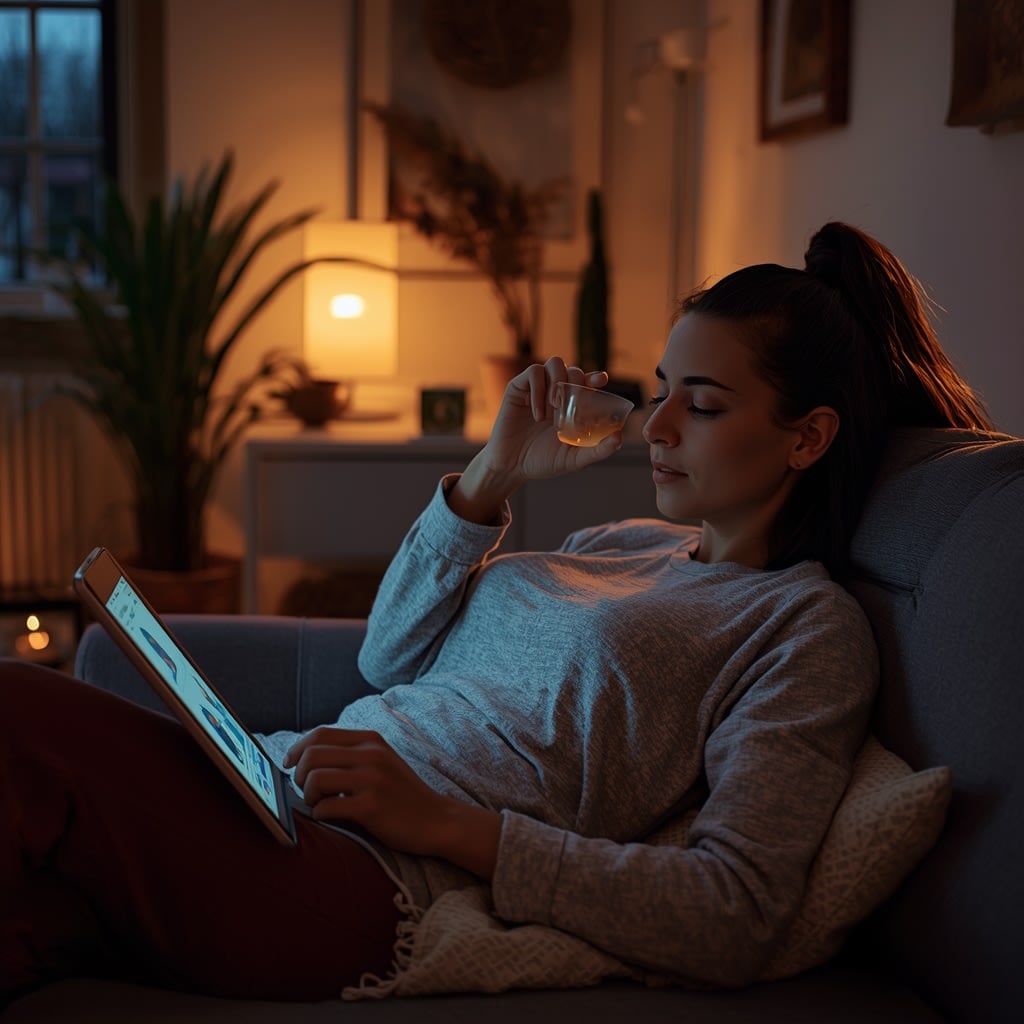
How Late Meals, Nighttime Screen Use, and Artificial Light Throw Off Your Body's Natural Clock
Understanding Your Body's Internal Clock and Its Importance
Have you ever had a restless night where you lay awake, gazing at the ceiling, only to wake up the next day feeling foggy and sluggish? That experience often points to an upset circadian rhythm—your body's internal 24-hour clock that controls when you feel awake, tired, hungry, and more.
Science journalist Lynne Peeples highlights in her book The Inner Clock how this internal timing system is designed to keep you alert during daylight and restful once night falls. Its rhythm is closely tied to natural light cues, like the brightening dawn that signals your body to boost energy-producing hormones, and the fading light at dusk that triggers melatonin release to help you prepare for sleep.


Sales On NOW... Don't Miss Out on Our Best Deals on Health!
Grab These Deals on Blue Light Blocking Glasses Before They're Gone!
🖤 Buying through our links helps support our app at no extra cost to you 🖤
Modern Life: A Constant Challenge to Your Circadian Rhythm
Unfortunately, everyday habits and environmental factors are working against your body’s natural timing. For example, using your phone late at night exposes you to blue light, mimicking morning sunlight and tricking your brain into thinking it’s still daytime. This suppresses melatonin and delays sleep.
Winter mornings, when it’s still dark outside as you head to work, can also confuse your internal clock, which expects to be in deep sleep during those early hours. Changes like daylight saving time shifts add another layer of disruption, often leaving people feeling off balance.
Researchers from sleep-focused organizations have even suggested that consistent timekeeping year-round might help reduce these issues, showing how deeply these disruptions affect us.
The consequences of ongoing circadian disturbances are serious. Women's Spot spoke with Lynne Peeples to explore how you can bring your internal clock back in sync and boost your overall health, including reducing risks for illnesses ranging from diabetes to dementia.
Sales On NOW... Don't Miss Out on Our Best Deals on Health!
Grab These Deals on Light Therapy Box Before They're Gone!
🖤 Buying through our links helps support our app at no extra cost to you 🖤
The Wide-Reaching Effects of Circadian Disruption on Your Health
People might recognize short-term circadian disruptions like jet lag—the groggy, off-feeling you get when traveling across time zones—because they affect your digestion, cause headaches, and throw off sleep. But the bigger problem happens when your body’s clock is out of whack over long periods.
Chronic misalignment has been connected to a higher chance of developing metabolic issues such as obesity and diabetes. Emerging research also links ongoing circadian disruption to increased risks of cancer and even brain diseases like Alzheimer’s and dementia.
Your body’s systems—from your hormones to your metabolism and brain function—are deeply rooted in these daily rhythms. When this timing is off, it can lead to serious health issues that may take time to become apparent but significantly impact your quality of life.
Fortunately, advancements in science are giving us better tools to measure circadian health and offer ways to reset your internal clock, making it easier than ever to take control of your rhythm and overall wellness.
Sales On NOW... Don't Miss Out on Our Best Deals on Health!
Grab These Deals on Wearable Sleep Trackers Before They're Gone!
🖤 Buying through our links helps support our app at no extra cost to you 🖤
Practical Tips to Align with Your Natural Circadian Rhythm
After diving deep into the science behind circadian rhythms, Lynne Peeples made several lifestyle changes that can inspire you. One key adjustment was reducing artificial light exposure at night by switching to soft electric candles which create a cozy atmosphere without the harsh blue light that disrupts sleep signals.
She also recommends avoiding heavy meals late in the evening, ideally stopping food intake at least a couple of hours before bedtime. Eating late overloads your system when it naturally expects a rest period, potentially throwing off your internal clock.
Alcohol consumption, especially in the later hours of the day, can interfere with sleep quality and circadian timing, so limiting intake is beneficial.
Consistency is another crucial element; going to bed and waking up around the same time daily helps maintain a steady rhythm. A wearable device like a Fitbit can track improvements in sleep quality when these habits are practiced.
These intentional steps create an environment that supports your body’s natural rhythms, leading to better rest, clearer days, and improved long-term health.
Sales On NOW... Don't Miss Out on Our Best Deals on Health!
Grab These Deals on Soft Electric Candles Before They're Gone!
🖤 Buying through our links helps support our app at no extra cost to you 🖤
The Overlooked Issue of Constant Nighttime Light Exposure in Urban Areas
Another challenge that many aren't aware of is living in so-called 'darkness deserts'—places where artificial light is continuously present at night. These areas are often found in lower-income neighborhoods, where harsh streetlights, security floodlights, and other bright spotlights stay on all night long.
People living in these environments are more likely to work night shifts or in poorly lit workplaces but then come home to these intense light conditions disrupting their sleep cycles. This creates a double burden on their circadian system.
The disparity is concerning because exposure to excessive nighttime light not only affects sleep but can also worsen the health issues associated with disrupted rhythms, making it a social equity problem as well.
In the United States, movements led by lighting designers aim to raise awareness about these issues and advocate for policies that regulate nighttime lighting to protect community health.
Addressing these environmental factors could make a significant difference in reducing health disparities related to circadian rhythm disturbances.
Sales On NOW... Don't Miss Out on Our Best Deals on Health!
Grab These Deals on Melatonin Supplements Before They're Gone!
🖤 Buying through our links helps support our app at no extra cost to you 🖤
Follow Us
Help our community grow by following us on social media

Athletes and Chrono-Coaching: Harnessing Your Body Clock for Peak Performance
An intriguing area where circadian science is making waves is sports. Athletes are learning to align their training and game schedules with their personal body clock peaks to improve performance.
Most people tend to reach their highest physical strength and speed in the late afternoon or early evening, but there’s variation depending on the individual’s unique rhythm and recent adjustments.
This has led to the rise of ‘chrono coaches’—specialists who help sports teams and individual athletes manipulate light exposure and other factors to adjust their internal clocks, especially after traveling across time zones.
Techniques to shift circadian timing include controlled use of daylight, light therapy boxes, and even blue light glasses that simulate daylight effects in a controlled way.
Many Olympic and professional athletes work carefully to reset their clocks before competitions to perform their best, showcasing how understanding your internal timing can translate into real-world success.
Sales On NOW... Don't Miss Out on Our Best Deals on Health!
Grab These Deals on Adjustable Dawn Simulators Before They're Gone!
🖤 Buying through our links helps support our app at no extra cost to you 🖤
Discovering Your Personal Energy Peaks and Making Them Work for You
Everyone’s natural rhythm, or chronotype, is unique. Some are morning people; others peak later in the day. Your circadian rhythm is influenced by biology and things like your exposure to sunlight and daily habits.
If you want to figure out your natural peak periods, try a short experiment: take some time off from your normal schedule and allow yourself to go to sleep and wake up without any alarms or external pressures.
Over several days, note when you feel most awake and energetic during the day. That window represents your optimal performance times, and if possible, you can try to organize your activities around them for increased productivity and well-being.
While modern life sometimes forces us into rigid schedules, tuning into your body’s natural cues whenever possible can improve both mental and physical health.
Such self-awareness encourages a gentler lifestyle rhythm that works with, rather than against, your internal clock.
Sales On NOW... Don't Miss Out on Our Best Deals on Health!
Grab These Deals on Circadian Rhythm Sleep Masks Before They're Gone!
🖤 Buying through our links helps support our app at no extra cost to you 🖤
Stay Updated with Women's Spot Insights
Get the latest women's health tips, wellness advice, and expert insights delivered directly to your inbox.
We respect your privacy. Unsubscribe at any time.

Core Habits to Boost Your Circadian Rhythm and Overall Wellness
If you’re looking for simple ways to nurture your internal clock daily, there are three fundamental habits to consider. Firstly, embrace the contrast between bright days and dark nights. Get outside for fresh air and natural light in the morning—even on cloudy days—to help set your rhythm.
During daytime, try to spend time near windows or outdoors instead of staying in dim indoor spaces. When night falls, reduce indoor lighting and cut down screen time to avoid confusing your brain.
Secondly, align your eating schedule with your evolutionary biology by consuming meals during daylight hours. Experts suggest stopping food intake at least three hours before bedtime to support natural digestive and hormonal rhythms.
Lastly, prioritize consistency. Going to bed, waking up, exercising, and eating at roughly the same times each day helps keep your circadian clock steady, making it easier for your body to function optimally.
While perfection every day isn’t necessary, focusing on these core habits can gradually improve sleep quality, mood, and long-term health.
Sales On NOW... Don't Miss Out on Our Best Deals on Health!
Grab These Deals on Digital Detox Apps Before They're Gone!
🖤 Buying through our links helps support our app at no extra cost to you 🖤
Beyond Sleep: How Circadian Rhythms Impact Your Entire Health Picture
One common myth is that circadian rhythms only influence sleep. In reality, these rhythms affect so many areas of your well-being, including metabolism, mood, cognitive function, and even hormone regulation.
Disrupting your internal clock can have ripple effects on your immune system, weight management, and mental health, highlighting why it’s essential to nurture this invisible yet powerful system.
Understanding this broad impact encourages a holistic approach to health that integrates lifestyle, environment, and self-care practices aligned with your natural body clock.
Women's Spot encourages readers to think of circadian rhythms as a foundational pillar supporting many aspects of daily life, not just the hours when you close your eyes.
By respecting and supporting your circadian rhythm, you set yourself up for improved energy, better health outcomes, and a greater sense of balance and happiness in everyday living.
Sales On NOW... Don't Miss Out on Our Best Deals on Health!
🖤 Buying through our links helps support our app at no extra cost to you 🖤
Comments
No comments yet. Be the first to share your thoughts!
Selected articles just for you
Discover more articles in this category that might interest you

Sales On NOW... Don't Miss Out on Our Best Deals!
🖤 Buying through our links helps support our app at no extra cost to you 🖤